Have you ever received a message that simply said “wyo” and felt unsure how to respond? You are not alone. In today’s fast-moving texting world, short codes appear constantly and can leave even regular texters pausing for a second.
One three-letter combination can feel casual, curious, or slightly open-ended depending on who sent it and when.
Understanding wyo meaning in text removes that moment of hesitation. It helps you read the tone correctly and keep the conversation flowing instead of stopping to guess.
This complete guide walks you through every major meaning, shows real conversation examples, explains how the slang developed, and gives practical tips so those three letters never catch you off guard again.
What Does WYO Mean in Text Messages?
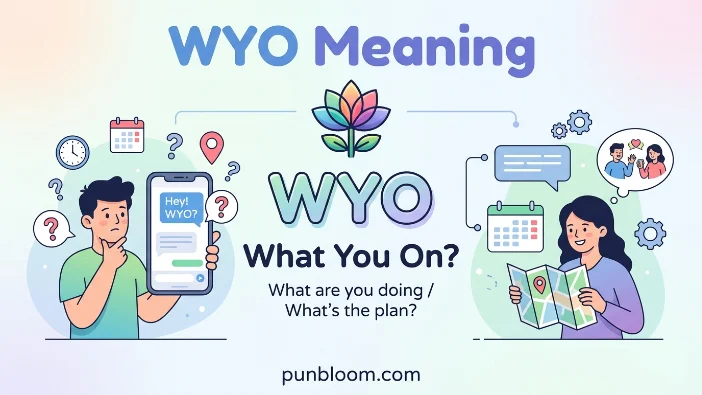
At its core, WYO is a texting abbreviation people use to keep chats quick and natural. The most common everyday meaning is What You On?
This phrase works like a relaxed “what are you up to?” or “what’s going on with you right now?” Someone types it when they want a status update, a sense of your current plans, or simply to start a conversation without a longer greeting. It carries a casual, current energy.
Other less frequent but still active meanings include:
- What You On To? – a slightly longer version asking about plans or activities
- Where You At? – occasional mix-up or regional overlap in some chats
- What You On About? – rare use when someone wants clarification on a topic
Context decides everything. A midday message from a friend almost always means a friendly check-in about your current activity. A late-night reply after silence might carry a different feel. Reading the messages around it remains the only reliable way to choose the right definition.
The Most Common Meaning: What You On?
When people search for wyo meaning in text, the answer they meet most often is What You On? This version sits at the center of everyday texting. It is light, open, and easy to answer.
Picture these short exchanges:
Person A: “Hey” Person B: “wyo?”
Or:
Friend A: “You free later?” Friend B: “Possibly. wyo with you?”
In both cases the speaker wants a quick sense of what the other person is doing or planning. The question invites a short real update instead of a one-word reply. It works especially well when two people already know each other and do not need a formal greeting.
Some people type “wyo tho” or “wyo fr” when they want a more honest or detailed answer. The extra words do not change the core meaning. They simply raise the expectation for something genuine instead of a flat response.
Origin of the Slang WYO
Like most texting shortcuts, WYO grew from the need for speed and natural rhythm. In spoken conversation people already said “what you on?” as a relaxed way of asking what someone was doing or into at the moment. Compressing it into three letters felt natural once messaging apps became daily tools.
Early group chats, social platforms, and casual online communities helped the abbreviation spread. It matched the flow of everyday talk and felt current without sounding forced. Over time the same three letters stayed focused on the check-in meaning while picking up only minor extra shades.
Today the slang lives comfortably across messaging apps and informal online spaces. Its staying power comes from how easy it is to type and how open-ended the question remains.
Real-Life Examples of WYO in Conversations
Seeing the letters in actual messages makes the meaning clearer. Here are several realistic examples across different situations:
Casual friend check-in A: “You been quiet today.” B: “Just busy. wyo?”
Starting a conversation A: “wyo” B: “Not much, just home. You?”
Making plans A: “Thinking about going out later.” B: “Oh word. wyo the move?”
Group chat energy A: “Anyone free this weekend?” B: “I’m down. wyo everyone else?”
After a long silence A: “Haven’t heard from you in a bit.” B: “My bad. wyo?”
Notice how the surrounding words and the relationship between the people guide the correct reading. A single three-letter code never stands alone.
Other Possible Meanings of WYO
While What You On? rules most conversations, a few other interpretations appear from time to time.
What You On To?
This slightly longer version asks about current plans or what someone is currently involved in. It carries the same casual tone and shows up when the speaker wants a bit more detail.
Where You At?
In some regional or overlapping chats the letters can lean toward location. This reading is less common and usually becomes clear from the messages around it.
What You On About?
On rare occasions the letters express mild confusion or a request for clarification, similar to “what are you talking about?” The surrounding context makes this meaning obvious when it happens.
These secondary meanings stay secondary for a reason. Most of the time the friendly activity check-in is the safest first assumption.
How Context Changes Everything
Receiving a bare “wyo” without any other words can feel open-ended. The platform, the previous messages, the relationship, and even the time of day all matter.
- Midday message from a regular friend = almost always a casual activity check-in
- After a long silence = wanting an update on what you have been doing
- Group chat about plans = asking what the current move is
- After surprising news = possible mild curiosity or clarification
A smart habit is to glance at the last few lines before answering. If the meaning still feels unclear, a simple “you mean what am I up to?” clears things up without awkwardness.
Table of WYO Meanings at a Glance
| Meaning | Typical Setting | Tone | Example Phrase |
|---|---|---|---|
| What You On? | Everyday chats | Friendly | “wyo?” |
| What You On To? | Plan-making conversations | Curious | “wyo later?” |
| Where You At? | Location-focused chats | Practical | “wyo rn?” |
| What You On About? | Confusion moments | Clarifying | “wyo just now?” |
This quick table covers nearly every situation you will meet. Keep it in mind and the three letters stop feeling mysterious.
Why People Prefer Abbreviations Like WYO
Texting rewards speed and easy rhythm. Full sentences slow the back-and-forth. Short codes keep the energy light and match the way many people already speak.
Abbreviations also create a sense of belonging. Knowing the code signals that you are part of the conversation style. At the same time, overusing them can shut people out. New members of a chat or people from different age groups may feel lost. Balancing speed with clarity remains the real skill.
Tips for Using and Understanding WYO
- Match the energy of the chat. If the conversation is relaxed, the activity check-in meaning feels natural.
- Add a little extra when tone might be unclear. “wyo? 😊” feels warmer than a bare “wyo.”
- Answer with something real instead of a one-word reply when someone asks you. The question invites more than “nothing.”
- In professional or mixed-age spaces, spell out the full question instead of relying on the abbreviation.
- When in doubt, ask for clarification. Most people prefer a quick question over a wrong assumption.
These small habits keep conversations smooth and relationships comfortable.
Common Mistakes People Make with WYO
Many texters fall into the same traps:
- Assuming everyone knows the exact same definition
- Giving a one-word answer when the other person wants a real update
- Using the abbreviation too early with someone who prefers full sentences
- Ignoring the previous messages and relationship
- Forgetting that tone of voice is missing in text
Avoiding these mistakes is mostly about awareness. The more you notice how different people use the same letters, the fewer misunderstandings you create.
WYO Across Different Platforms and Age Groups
On regular messaging apps the activity check-in meaning dominates. In group chats about plans the “what’s the move” energy appears more often. On casual social platforms the same core meaning stays strong.
Younger texters tend to use the abbreviation freely and switch between slight shades of meaning without explanation. Older or more formal users sometimes prefer the full phrase. Neither approach is wrong. The key is reading the room and adjusting.
How WYO Fits into Broader Texting Culture
WYO is only one small piece of a much larger system of shortcuts. The same forces that created this abbreviation also produced dozens of others that rise and fade every year. Language online moves faster than traditional dictionaries. New meanings appear, old ones soften, and regional flavors keep the system alive.
What stays constant is the human desire to connect quickly and feel understood. Abbreviations serve that desire when used thoughtfully. They become barriers when used carelessly. Paying attention to context turns a potential source of confusion into a chance for clearer connection.
FAQs:
What does WYO mean in text from a girl?
Most of the time it means “What You On?” She is checking in or starting a casual conversation about what you are doing. Look at the messages before it. A soft emoji usually signals friendly interest rather than anything deeper.
Is WYO the same as WYD?
They are very close. WYD focuses more on “what are you doing” while WYO carries a slightly broader “what are you on / what’s your current vibe or plan” feel. In practice most people treat them as interchangeable.
How should I reply to WYO?
Share a short real update and then return the question. A simple “Just chilling at home. You?” keeps the conversation balanced and open.
Can WYO feel confusing?
It can if the relationship is new or the previous messages give no clues. In those cases a quick clarifying question works better than guessing wrong.
Does WYO mean the same thing on every app?
The core activity check-in meaning stays consistent across most platforms. Slight variations appear in close friend groups or plan-making chats, but the overall use remains easy to recognize with context.
Conclusion:
Understanding wyo meaning in text is less about memorizing one fixed definition and more about reading the conversation with care. The three letters most often ask what you are up to, yet they can also carry slight shades of curiosity or clarification depending on who is typing and why.
The next time those letters appear on your screen, pause for a moment. Look at the messages around them. Consider the relationship. Then answer with intention. That small habit turns a potential moment of uncertainty into smoother, clearer communication.
Language keeps changing and new abbreviations will keep appearing. Staying curious and thoughtful is the best way to keep up.

I’m Mason Walker, a professional content writer, SEO researcher, and digital publishing enthusiast committed to creating content that is accurate, engaging, and genuinely helpful. I believe every article should answer real questions, solve real problems, and provide readers with trustworthy information they can rely on.