Have you ever opened a message and seen just “mk” staring back at you? Your brain freezes for a second. Is it a typo? A secret code? Or something you should already understand?
That tiny two-letter reply can leave people guessing. In today’s fast digital world, short forms fly across screens every second. MK has become one of those everyday shortcuts that show up in chats, comments, and group messages.
Understanding mk meaning in text helps you reply faster, avoid awkward moments, and stay part of the conversation.
What Does MK Mean in Text Messages?
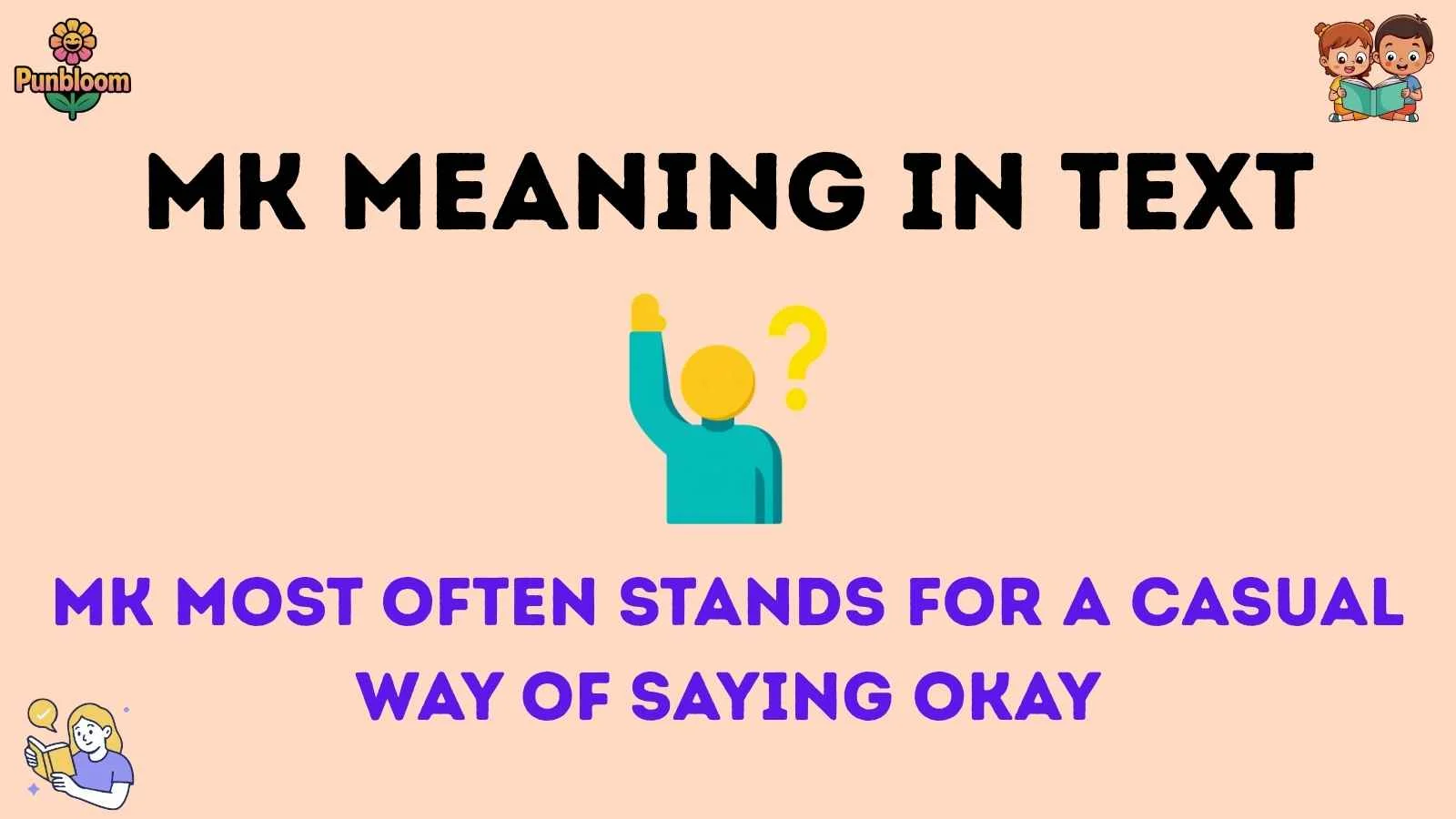
MK most often stands for a casual way of saying “okay.” Think of it as a softer, more laid-back version of a simple “ok.” People type mk when they want to agree without sounding too formal or energetic.
It carries a light, almost mumbled tone. Imagine someone saying “mmmkay” out loud with a small nod. That is the feeling mk tries to capture in writing.
In group chats or one-on-one messages, mk shows the person heard you and accepts what you said. It does not always mean strong excitement. Sometimes it simply means “I got it” or “fine by me.”
Other less common meanings exist, but the “okay” sense dominates everyday texting. Context always decides the exact flavor. A single mk after a plan can signal quiet agreement. The same letters after a long story might mean the person is listening but not fully engaged.
Mastering mk meaning in text starts with noticing the conversation around it. The letters stay the same. The feeling changes with the moment.
The Origin of MK as Text Slang
MK grew from spoken habits. People have long said “mmkay” or “mmk” when they agree in a relaxed way. Typing those sounds into a phone naturally shortened them further.
Early internet chat rooms and instant messengers rewarded speed. Users dropped extra letters to keep up with fast conversations. “Okay” became “ok,” then “k,” and later softer versions like “mk” appeared. The “m” softens the word and adds a tiny pause, almost like thinking before agreeing.
Mobile keyboards and autocorrect also shaped the form. Typing “mmk” or “mk” felt quick and natural on small screens. Over time, younger users especially adopted it because it felt less stiff than a full “okay.”
The slang spread through group chats, social media comments, and gaming lobbies. Once enough people used it, others picked it up without needing an explanation. Today mk sits comfortably among other short affirmations that keep digital talks moving.
Understanding the origin shows why mk feels friendly rather than cold. It carries the memory of a spoken, slightly drawn-out “okay.”
Common Ways People Use MK in Everyday Chats
MK appears in many daily situations. Here are the most frequent patterns:
- Agreeing to plans: Someone suggests meeting at 7. The reply “mk” means the time works.
- Acknowledging information: A friend shares an update. “Mk” shows you received it.
- Soft acceptance: When a decision is not ideal but acceptable, mk signals you will go along.
- Ending a topic: After a short exchange, mk can close the loop politely.
- Showing mild interest: In longer threads, mk keeps the conversation alive without demanding more energy.
People also mix mk with other words. “Mk cool” or “mk sounds good” add a bit more warmth. A lone mk stays more neutral.
Tone depends on punctuation and emojis. “Mk 👍” feels positive. “Mk…” with dots can sound hesitant. Pure “mk” stays simple and open to interpretation.
These patterns make mk flexible. It fits busy lives where long replies are not always possible.
Real Conversation Examples Showing MK in Action
Seeing mk inside actual chats helps lock in the meaning. Here are several realistic exchanges:
Example 1 – Making plans Friend: Want to grab coffee tomorrow at 10? You: Mk, that works for me.
Example 2 – Sharing news Friend: I finished the project early. You: Mk nice.
Example 3 – Soft agreement Friend: We’re going with the cheaper option. You: Mk.
Example 4 – Group chat Person A: Movie starts at 8, meet at the lobby. Person B: Mk Person C: See you there.
Example 5 – Mild hesitation Friend: Can you cover my shift? You: Mk… I’ll check my schedule.
Notice how mk never needs extra explanation in these moments. The surrounding words supply the emotion. A short reply keeps the flow light and natural.
Practice reading these styles and you will spot mk instantly in your own messages.
MK vs Similar Texting Shortcuts
Many short forms sit near mk. Knowing the differences prevents mix-ups.
| Short Form | Usual Meaning | Tone Level | Best Used When |
|---|---|---|---|
| mk | okay / mmkay | Soft, casual | Light agreement or acknowledgment |
| ok | okay | Neutral | Clear, standard confirmation |
| k | okay | Minimal, sometimes cold | Very brief reply |
| mmk | mmkay | Soft, thoughtful | Similar to mk, slightly longer |
| alright | alright | Friendly | Slightly warmer acceptance |
| cool | cool | Positive | Showing more enthusiasm |
| got it | understood | Clear | Confirming you received info |
MK sits between “ok” and “k.” It feels warmer than a bare “k” yet shorter than a full “okay.” Choose it when you want to stay friendly without writing much.
This comparison table makes the choice easy. Match the tone you want and pick the right letters.
Different Meanings of MK Beyond Everyday Texting
While the “okay” sense rules most chats, MK can carry other meanings depending on the circle.
In some friend groups, MK simply stands for someone’s initials. A person named Mark or a nickname starting with those letters might sign messages that way.
In certain online communities, MK can refer to a game title or brand. Context usually makes this clear. If the conversation is about fighting games or specific products, the meaning shifts.
Occasionally people use MK as a short form inside longer phrases. The surrounding text always reveals the intent.
For pure texting slang, stick with the “okay” reading first. Only move to other interpretations when the topic clearly points elsewhere. This habit keeps misunderstandings low.
When You Should Use MK and When to Avoid It
MK works best in relaxed settings. Use it with friends, family, or casual coworkers who already text in short forms. It saves time and keeps the mood easy.
Avoid MK in professional emails, formal requests, or first-time conversations with strangers. A full “okay” or “sounds good” feels more polished there.
Also pause before sending mk if the topic is serious. A short reply can seem dismissive when someone shares heavy news. In those moments a longer, warmer response shows better care.
Timing matters too. If a conversation has already grown long and detailed, a sudden mk might feel like you are checking out. Match the energy of the thread.
These simple rules help mk land the way you intend.
How Context Changes the Feeling of MK
Context is the real boss of mk meaning in text. The same two letters can feel different in different spots.
After a happy suggestion, mk often reads as cheerful acceptance. After a complaint, it can sound like quiet understanding. After a long explanation, it may simply mean “I followed you.”
Emojis and extra words shift the mood further. Adding a smiley makes mk warmer. Adding a period can make it flatter. Writing “mk sure” or “mk got it” adds clarity.
Pay attention to the person texting you as well. Some friends always reply with short forms. Their mk stays light. Others rarely use slang, so their mk might carry extra weight.
Reading the whole thread before reacting keeps you accurate.
Tips for Using MK Naturally in Your Own Messages
Want to start using mk without sounding forced? Follow these easy tips:
- Keep it lowercase most of the time. “mk” feels more casual than “MK.”
- Pair it with a short follow-up when needed. “Mk, see you then” feels complete.
- Match the other person’s style. If they use lots of slang, mk fits better.
- Use it to keep replies quick during busy days.
- Avoid stacking too many short forms in a row. Mix with normal sentences.
- Watch for reactions. If someone asks what you mean, switch to fuller words next time.
Practice in low-stakes chats first. Soon the letters will feel natural under your thumbs.
Regional and Generational Differences in MK Usage
Not everyone uses mk the same way. Younger texters tend to adopt it faster because they grew up with rapid messaging. Older users may still prefer “ok” or full words.
In some regions the soft “mmkay” sound is more common in speech, so mk appears more often in writing. Other areas stick closer to classic “ok.”
Social platforms also influence frequency. Fast-moving group chats and story replies favor short forms. Longer email-style messages rarely need them.
These differences mean you might see mk more in certain circles than others. Observing the people you talk with teaches you the local flavor faster than any rulebook.
Common Mistakes People Make with MK
Even simple slang can trip users up. Here are frequent errors and how to fix them:
- Sending mk when the topic needs more care. Solution: Read the emotional temperature first.
- Assuming everyone knows the meaning. Solution: If the person seems confused, spell out “okay.”
- Overusing it until every reply becomes mk. Solution: Vary your language.
- Typing MK in all caps, which can feel louder than intended. Solution: Stay lowercase unless you want emphasis.
- Ignoring follow-up questions after a mk. Solution: Stay open if the other person continues.
Avoiding these small slips keeps your chats smooth and friendly.
MK in Group Chats vs One-on-One Messages
Group chats love short forms. A quick mk keeps the thread moving without cluttering the screen. Multiple people can acknowledge a plan with almost no extra text.
One-on-one messages allow more room for tone. Here mk can feel more personal. Pairing it with a name or a short comment often works well.
In large groups, silence after a plan can create confusion. A simple mk from several members confirms everyone is on the same page.
Both settings benefit from the same core meaning. The difference lies mainly in volume and speed.
How MK Fits into Broader Texting Culture
MK belongs to a larger family of quick affirmations. Modern messaging rewards brevity. People juggle many conversations at once and appreciate replies that respect their time.
Short forms also create a shared language among frequent texters. Using mk signals you are part of that relaxed digital culture.
At the same time, balance remains important. Pure efficiency can sometimes feel distant. Mixing short replies with occasional fuller sentences keeps relationships warm.
MK is one useful tool in that mix. It is not the only tool.
Creative Ways People Play with MK
Some users stretch the basic form for fun. You might see:
- “mkay” with extra letters for a drawn-out effect
- “m k” with a space for playful emphasis
- “mk mk” repeated for light humor
- Combined with other slang like “mk bet” or “mk bett”
These variations stay informal and work best among close friends who already share the same humor.
Creativity keeps texting lively. Just make sure the other person can still read the intent.
FAQs:
What does mk mean in text from a girl or guy?
The meaning stays the same regardless of who sends it. MK usually means a casual “okay.” Tone and context matter more than the sender’s gender.
Is mk the same as mmk?
Yes, they are very close. Mmk is a slightly longer version of the same soft “okay.” Many people use them interchangeably.
Can mk mean something rude?
Rarely. On its own mk is neutral to friendly. Only extra punctuation or a cold conversation around it can make it feel dismissive.
Should I use mk in work chats?
Only if the workplace culture is very casual and everyone already uses short forms. In most professional settings a full “okay” or “sounds good” is safer.
How do I reply when someone sends mk?
You can continue the conversation normally, send your own short acknowledgment, or move to the next topic. No special response is required.
Conclusion:
MK meaning in text is simple once you see the pattern. It is a soft, casual way to say “okay” that fits modern messaging life. From its spoken roots to everyday chats, the two letters carry a relaxed agreement that keeps conversations moving.
You now know the main meaning, useful examples, clear comparisons, and practical tips for using it well. Context remains the key that unlocks the exact feeling each time.
Next time “mk” appears on your screen, you will read it with confidence. And when you type it yourself, you will know exactly the tone you are sending.
Feel free to explore more everyday slang guides and keep sharpening your digital communication skills. Happy texting!

Jacky Williams is a passionate and results-driven professional who believes in quality, creativity, and consistency. With a strong focus on delivering value, Jacky Williams works on modern ideas and smart solutions that help brands and individuals grow. Every project is handled with dedication, professionalism, and a clear vision for long-term success.