Have you ever opened a message, seen the letters “MB,” and paused for a second? Your brain races. Is it a typo? A new slang? Or something you’ve simply forgotten? You’re not alone. Thousands of people search for the mb meaning in text every single day because texting language moves faster than most of us can keep up.
In today’s digital world, abbreviations save time and add personality. Yet they also create confusion. One short combination of letters can carry different meanings depending on who sends it, where it appears, and the conversation around it. Understanding MB helps you reply with confidence instead of guessing.
This complete guide explains every common use of MB in texting, chat apps, social media, and even professional messages. You’ll see real examples, clear tables, origin stories, and practical tips so you never feel lost again.
What Does MB Mean in Text?
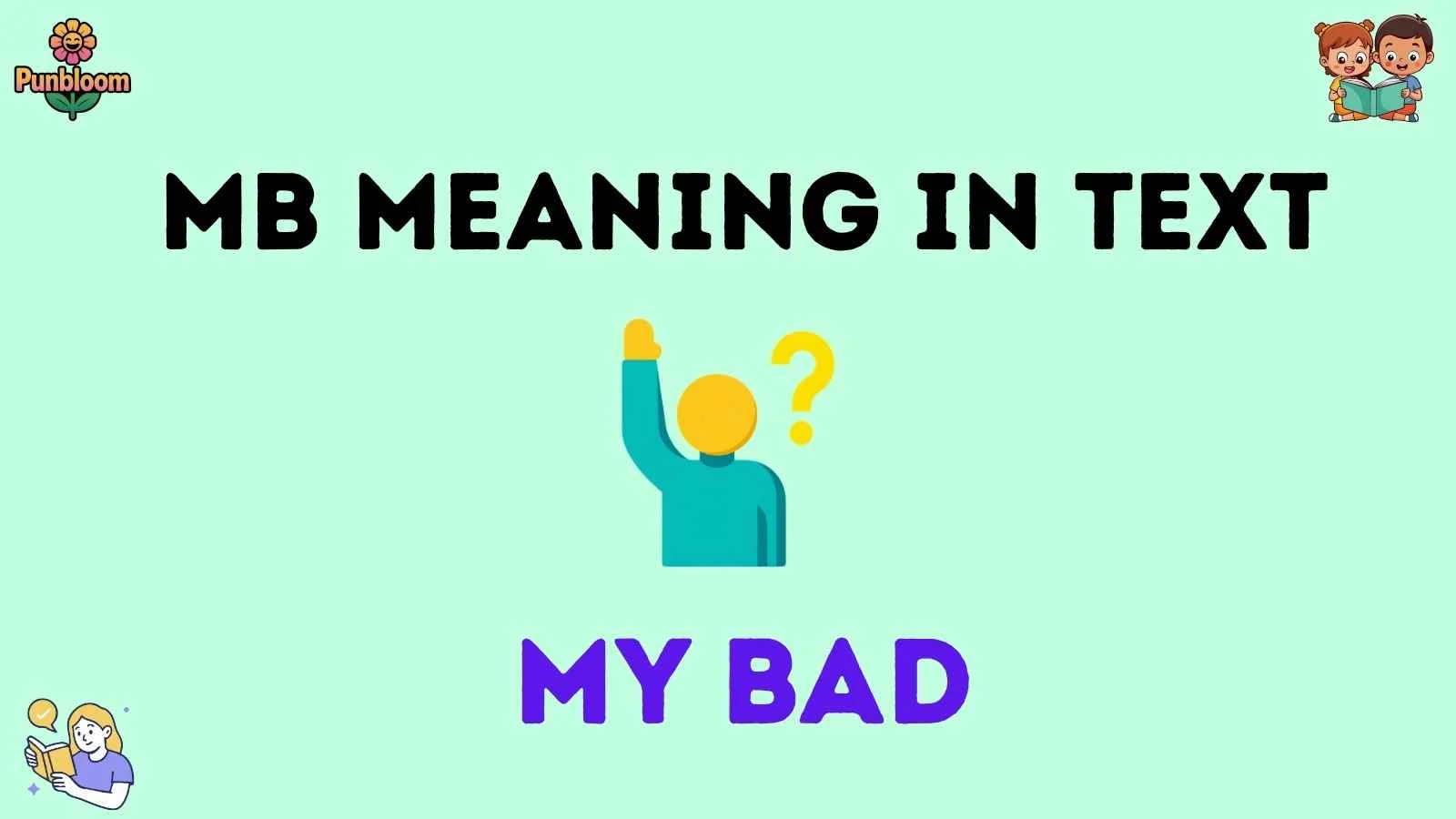
The most widespread mb meaning in text is “My Bad.”
People type MB when they want to own a small mistake quickly. It works like a friendly apology without writing a full sentence. You might see it after someone sends the wrong information, arrives late to a plan, or accidentally interrupts a conversation.
Example in a chat:
- Friend: “You were supposed to bring the snacks!”
- You: “MB, I completely forgot. On my way now with extra chips.”
This version of MB feels casual and warm. It softens the moment and keeps the conversation light. Most younger users and close friends understand it instantly.
Other less common meanings exist, and context decides which one applies. We’ll cover those next so you can read any message with clarity.
Other Popular Meanings of MB in Texting and Chat
While “My Bad” leads the list, MB can stand for several other things. Here are the ones you’ll meet most often:
- Message Back – A polite request for a reply.
- Maybe – Short for uncertainty, though “maybe” is already short.
- Mega Bytes – Technical talk about file size or data.
- Mom’s Best or family-related shorthand in private chats.
- Mental Breakdown – Rare and usually dramatic; tone and emojis reveal it.
Quick comparison table:
| Abbreviation | Full Meaning | Common Context | Tone |
|---|---|---|---|
| MB | My Bad | Apology for small error | Casual, friendly |
| MB | Message Back | Asking for a reply | Neutral, polite |
| MB | Maybe | Uncertain plans | Casual |
| MB | Megabytes | Tech or file talk | Informative |
| MB | Mental Breakdown | Emotional venting | Dramatic |
Always look at the full message. A single MB after a wrong address almost always means “My Bad.” The same letters after “Did you get my email?” usually means “Message Back.”
The Origin of MB as “My Bad”
Slang rarely appears overnight. My Bad started in American basketball courts during the 1970s and 1980s. Players used it when they made a bad pass or missed a defensive assignment. The phrase felt lighter than “sorry” and kept the game moving.
By the 1990s the expression moved into everyday speech. Then texting arrived. Character limits on early phones pushed people to shrink popular phrases. “My Bad” became MB. The two-letter version spread through instant messaging, SMS, and later WhatsApp, Instagram, and Snapchat.
Today the abbreviation lives across generations. Parents, teens, and coworkers all use it, though the frequency changes with age and relationship closeness.
Real-Life Examples of MB in Different Situations
Seeing MB in action makes the meaning stick. Here are everyday scenarios:
1. Friendship chat Alex: “I thought the movie started at 8.” Sam: “MB, I checked the wrong listing. It’s actually 7:30.”
2. Group project Team member: “I uploaded the wrong file.” Reply: “MB guys, correct version coming in two minutes.”
3. Family message Teen: “I finished the milk.” Parent: “MB, I should have bought more yesterday.”
4. Dating conversation Person A: “I double-booked our dinner.” Person B: “MB, life happens. Let’s pick another night.”
5. Customer support style (rare but possible) Agent: “MB for the delayed response. Here’s the solution.”
Notice how the tone stays light. MB rarely appears in formal emails or legal documents. It belongs to relaxed digital spaces.
How Context Changes the Meaning of MB
Context is everything. The same two letters can shift meaning based on:
- Who sends the message
- The app or platform
- Surrounding words and emojis
- Previous conversation history
Helpful checklist:
- Apology vibe + mistake mentioned → My Bad
- Question about reply + waiting tone → Message Back
- Numbers or files nearby → Megabytes
- Heavy emotion or crying emoji → possible Mental Breakdown
When doubt remains, simply ask: “Just checking—did you mean my bad?” Most people appreciate the clarity.
MB vs Similar Texting Abbreviations
Texting is full of short apology and reply codes. Comparing them prevents mix-ups.
- MB = My Bad (casual ownership of a small error)
- SRY or SORRY = Full apology, slightly more formal
- MYB = Same as My Bad, less common
- NP = No Problem (response after apology)
- YW = You’re Welcome
- BRB = Be Right Back
- TTYL = Talk To You Later
MB sits in the middle of the politeness scale. It acknowledges the slip without heavy emotion. That balance makes it popular.
When You Should (and Shouldn’t) Use MB
Good times to use MB:
- Close friends and family
- Casual work chats among teammates
- Quick corrections in group texts
- Lighthearted social media comments
Better to avoid MB:
- First messages to strangers
- Formal business emails
- Serious apologies (a full sentence works better)
- Situations involving real harm or strong feelings
Think of MB as a soft verbal high-five after a minor fumble. Save deeper words for deeper moments.
Generational Differences in Understanding MB
Not everyone reads MB the same way.
- Gen Z and younger Millennials usually default to “My Bad.”
- Older Millennials and Gen X often recognize both “My Bad” and “Message Back.”
- Some Baby Boomers may still ask for clarification.
Platforms also shape usage. TikTok and Instagram DMs favor the apology meaning. Professional tools like Slack sometimes lean toward “Message Back” in status notes.
If you text across age groups, a quick extra word (“MB – my bad”) removes any chance of confusion.
Fun Variations and Related Slang
Language loves to play. People sometimes stretch MB into longer forms:
- “MB fr” = My Bad for real
- “MB lol” = My Bad, laughing it off
- “Big MB” = Bigger apology energy
- “MB 🙈” = My Bad with shy emoji
You’ll also see related phrases:
- “My b” (even shorter)
- “Whoops MB”
- “MB on that one”
These tiny twists keep conversations feeling alive and personal.
Why Abbreviations Like MB Matter in Modern Communication
Speed and clarity battle each other every day. Abbreviations win on speed. Clear understanding wins on connection. Knowing the mb meaning in text lets you enjoy both.
When everyone shares the same code, messages stay short yet warm. Misunderstandings drop. Relationships feel smoother. That small knowledge becomes a quiet social superpower.
FAQs:
1. What is the most common MB meaning in text?
The most common meaning is “My Bad.” People use it as a quick, casual apology for small mistakes.
2. Can MB mean something else besides My Bad?
Yes. Depending on context it can mean Message Back, Maybe, Megabytes, or rarely Mental Breakdown. Always read the full conversation.
3. Is it okay to use MB at work?
In relaxed team chats, yes. In formal emails or with clients, write the full phrase or a more professional apology.
4. How do I reply when someone says MB?
A simple “No worries,” “All good,” or “NP” works perfectly. It closes the loop and keeps the chat friendly.
5. Has the meaning of MB changed over time?
The core “My Bad” meaning has stayed steady since the early 2000s. New secondary meanings appear, but the apology sense remains strongest.
Conclusion:
The mb meaning in text is simple once you know the main uses, yet rich enough to adapt to many situations. “My Bad” leads the pack as a friendly way to own small errors. Other meanings appear less often and depend heavily on context.
Next time those two letters pop up, you’ll read them with confidence. You’ll also know exactly when to type them yourself. Clear, kind communication starts with understanding the shortcuts we all share.

I’m Mason Walker, a professional content writer, SEO researcher, and digital publishing enthusiast committed to creating content that is accurate, engaging, and genuinely helpful. I believe every article should answer real questions, solve real problems, and provide readers with trustworthy information they can rely on.