Have you ever stared at a short message and felt completely lost? Someone sends “See you tm” or “Can you tm me later?” and you freeze for a second. Two little letters. No full words. Just tm. What could it mean?
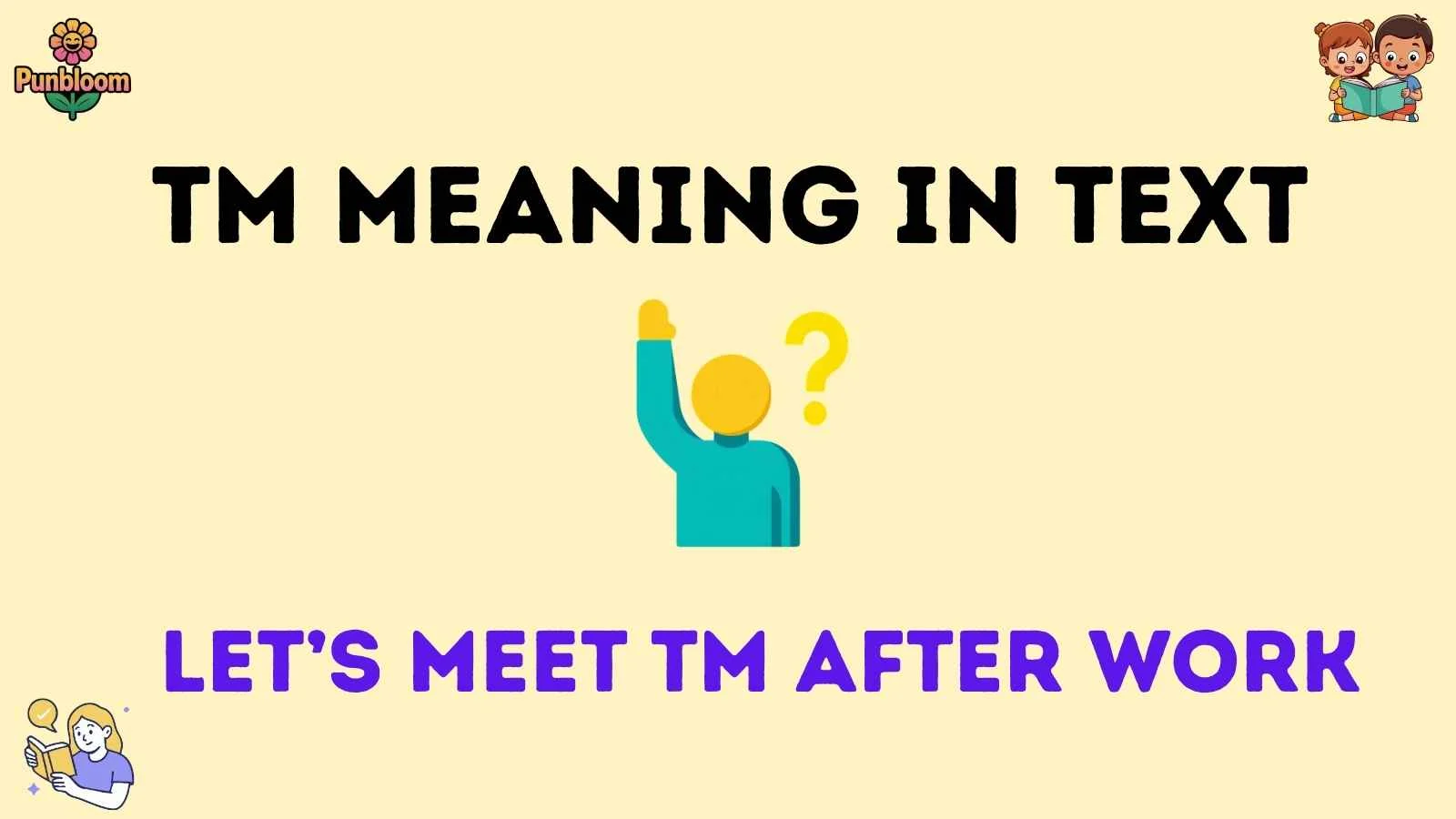
If that moment of confusion sounds familiar, you are in good company. The tm meaning in text is one of the most common questions people ask about modern slang. In most casual chats, TM stands for “tomorrow.” It can also mean “text me” depending on the sentence. Once you know the main meanings, those two letters stop feeling mysterious and start feeling useful.
In a world of lightning-fast messaging, people love short forms. Full words take time. Abbreviations keep conversations moving. Understanding the tm meaning in text helps you read messages clearly and reply without hesitation.
What Does TM Mean in Text?
The most frequent tm meaning in text is “tomorrow.” People use it when they want to talk about the next day without typing the full word.
You will see it in messages like:
- “Let’s meet tm after work.”
- “I have a test tm morning.”
- “Call me tm if you’re free.”
A second common meaning is “text me.” This version appears when someone wants a reply or follow-up message.
Examples include:
- “Tm when you get home.”
- “Tm the details later.”
Context decides which meaning fits. If the sentence talks about time or plans, tm almost always means tomorrow. If the sentence asks for a message, it means text me.
Other less common uses exist in specific groups, but “tomorrow” and “text me” cover the vast majority of everyday chats. Knowing these two main meanings removes most of the guesswork.
The Origin of TM in Texting Culture
Short forms like tm grew from real needs. Early mobile phones limited message length and charged per text. Users looked for every possible way to shrink common words. “Tomorrow” became tm. “Text me” followed the same path.
As free messaging apps spread, the habit stayed. People enjoyed the speed. Young users adopted tm first in school chats and online forums. From there it moved into group messages, social media comments, and everyday conversations.
The rise of busy digital lives made short forms even more valuable. In crowded group chats, a quick tm keeps the message short and easy to scan. Over time, the abbreviation became part of the shared language that many people now understand instantly.
This origin explains why the tm meaning in text feels so natural today. It started as a practical shortcut and stayed because it continues to save time.
How People Actually Use TM in Daily Chats
Seeing tm in real situations makes the meaning stick.
Most people use it in two clear ways.
When talking about the next day: They replace “tomorrow” with tm to keep plans short and casual.
When asking for a message: They write tm instead of “text me” to request a follow-up.
The tone stays relaxed. TM belongs in friendly conversations, not formal emails or work reports.
People often pair tm with other short forms. You might see “see u tm rn” or “tm me asap.” These combinations keep the entire message fast and energetic.
Reading the full sentence almost always reveals the correct meaning. Time-related words point to tomorrow. Requests for contact point to text me.
Real Conversation Examples of TM in Action
Examples turn knowledge into confidence. Here are realistic chats that show both main meanings.
Example 1 – Plans for the next day Friend A: “Want to grab lunch tm?” Friend B: “Sure! What time works?”
Example 2 – School or work reminder Person: “Don’t forget the meeting tm at 10.” Reply: “Got it. See you then.”
Example 3 – Requesting a message Texter: “Tm me when you leave the house.” Reply: “Will do 👍”
Example 4 – Group chat update Member: “Who’s free tm evening?” Another: “I am. Let’s decide the place.”
Example 5 – Quick follow-up Friend: “I found the info you needed.” You: “Awesome. Tm me the link.”
These examples show how smoothly tm fits into everyday talk. Once you recognize the pattern, the abbreviation becomes easy to use yourself.
TM Compared to Other Popular Text Abbreviations
Many short forms share the same texting space. A clear comparison helps you choose the right one.
| Abbreviation | Full Meaning | Best Used For | Tone |
|---|---|---|---|
| tm | Tomorrow | Talking about the next day | Casual |
| tm | Text me | Asking for a message | Friendly |
| tmr | Tomorrow | Alternative spelling of tomorrow | Casual |
| tmrw | Tomorrow | Longer version of tomorrow | Relaxed |
| ttyl | Talk to you later | Ending a conversation | Friendly |
| brb | Be right back | Stepping away briefly | Neutral |
| lmk | Let me know | Requesting information | Casual |
TM stands out because it can carry two useful meanings. Context and surrounding words make the difference clear. Using the table above helps you pick the most natural short form for any situation.
When You Should Use TM (And When to Skip It)
Timing and audience matter.
Good times to use tm:
- Casual chats with friends
- Family group messages
- Making or confirming plans
- Asking someone to message you later
- Social media comments and stories
Times to avoid tm:
- Formal emails or professional reports
- Messages to bosses, teachers, or clients
- Situations that need absolute clarity
- First conversations with people you barely know
- Any context where a misunderstanding could cause problems
When the chat feels relaxed and the meaning stays obvious, tm works perfectly. In more serious or unclear moments, writing the full words removes all doubt.
Popular Variations and Creative Twists on TM
People enjoy playing with language, and tm has several common variations.
- tmr or tmrw – longer forms of tomorrow
- tm! – adds energy with the exclamation
- tm 😊 – softens the message with a friendly emoji
- tm me – clear request for a text
- see u tm – classic way to end a chat
Some close friend groups create private twists. They might stretch the letters or combine tm with other slang only they understand. These creative versions stay fun as long as everyone shares the same meaning.
The core tm meaning in text remains steady even when people add personal style.
Why TM Became So Popular in Digital Communication
Several practical reasons explain the lasting success of tm.
Speed comes first. Two letters beat eight or nine every time. In busy chats, that small saving feels valuable.
Readability matters too. Short messages are easier to scan on phone screens. TM keeps sentences clean and quick to process.
Shared understanding helps it spread. Once enough people know the tm meaning in text, the abbreviation becomes invisible. Readers understand it without stopping.
Flexibility seals the deal. TM works for both time and contact requests. That dual usefulness keeps it relevant across many different conversations.
These factors turned a simple shortcut into everyday digital language.
Common Mistakes People Make With TM
Even popular slang can cause confusion when used carelessly.
Mistake 1: Using tm without clear context. Fix: Make sure the sentence shows whether you mean tomorrow or text me.
Mistake 2: Assuming everyone knows the abbreviation. Fix: Switch to full words with older relatives or new contacts.
Mistake 3: Mixing both meanings in the same short message. Fix: Keep one clear meaning per sentence.
Mistake 4: Overusing short forms until the message becomes hard to read. Fix: Balance abbreviations with full words for smoother flow.
Mistake 5: Sending tm in formal writing. Fix: Save it strictly for casual digital chats.
Avoiding these simple errors keeps your messages clear and friendly.
How TM Keeps Conversations Fast and Friendly
One quiet strength of tm is its ability to keep chats light. When someone writes “see you tm,” the message feels warm without needing extra words.
In group chats this feels especially useful. Short updates travel faster and stay visible. A quick “tm works for me” confirms plans without long explanations.
This small linguistic choice supports relaxed, low-pressure communication. It lets people stay connected without slowing the conversation down.
Tips for Using TM Like a Confident Texter
Want to sound natural every time? Try these practical tips.
- Look at the full sentence before deciding the meaning.
- Pair tm with clear time words when you mean tomorrow.
- Add “me” when you want someone to text you.
- Match the energy of the chat. Keep it light when others keep it light.
- Switch to full words when the conversation turns serious.
These small habits make the abbreviation feel effortless rather than forced.
The Place of TM in Modern Texting Trends
Text slang changes constantly. New abbreviations appear while others slowly fade. TM has stayed strong because it solves two clear, everyday needs: talking about the next day and asking for a message.
It sits comfortably alongside lasting forms such as “idk,” “rn,” “lmk,” and “ttyl.” These survivors share one important trait—they remain useful across different age groups and platforms.
Even as voice messages and video chats grow more popular, short text replies still fill the gaps. People often start a plan in a voice note and confirm it with a quick typed tm. The hybrid style keeps the abbreviation relevant.
The tm meaning in text is practical and versatile. In most chats it means “tomorrow.” In other moments it means “text me.” Context and surrounding words make the difference clear.
FAQs:
What does tm mean in text?
In most casual messages, tm means “tomorrow.” It can also mean “text me” when someone is asking for a reply.
How do I know if tm means tomorrow or text me?
Look at the rest of the sentence. Time or plans point to tomorrow. A request for contact points to text me.
Is tm the same as tmr or tmrw?
Yes. Tmr and tmrw are longer versions that also mean tomorrow. All three are common and interchangeable in casual chats.
Can I use tm in work messages?
Only with close colleagues who already text casually. In formal or professional settings, write the full words instead.
Is tm still common in 2026?
Yes. Despite new slang appearing regularly, tm continues to appear in everyday chats because it stays useful and easy to understand.
Conclusion:
You now understand its origin, real examples, best moments to use it, common mistakes, variations, and place in modern digital language. Those two letters no longer need to cause confusion.
Next time you see tm in a message, you will recognize it instantly. And when you need to talk about tomorrow or ask for a text yourself, you can use it with confidence.
Keep exploring more texting slang and communication tips. The more you understand these small digital habits, the smoother and more enjoyable every conversation becomes.

I’m Mason Walker, a professional content writer, SEO researcher, and digital publishing enthusiast committed to creating content that is accurate, engaging, and genuinely helpful. I believe every article should answer real questions, solve real problems, and provide readers with trustworthy information they can rely on.